Introduction
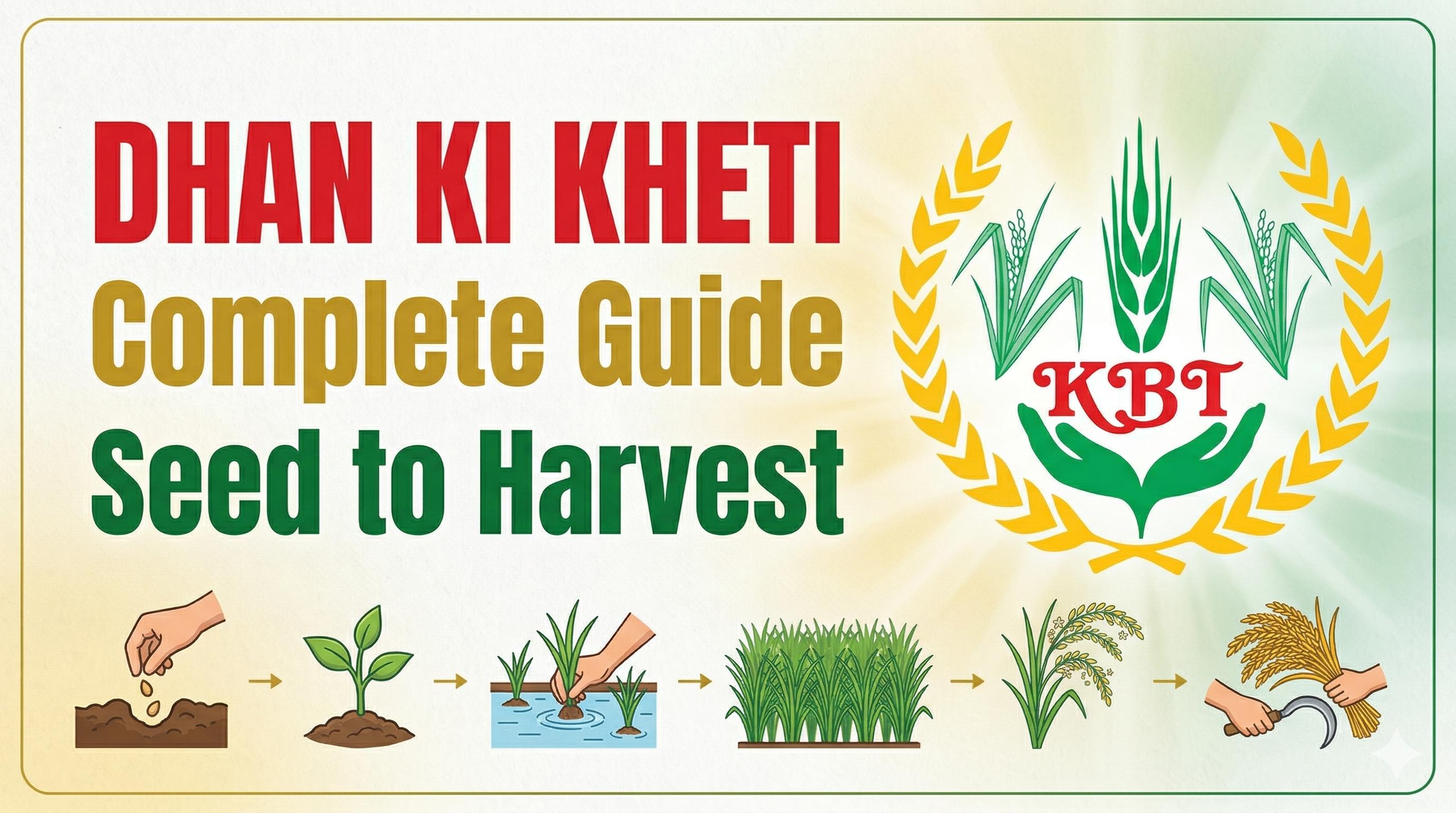
Rice (Paddy) is one of the most important food crops in India. Millions of farmers in Uttar Pradesh and other states depend on paddy cultivation for their livelihood. To get a good yield, proper management from seed selection to harvesting is very important. This complete guide explains the entire process step by step – including traditional transplanting method, Direct Seeded Rice (DSR), and modern techniques.
Note: This is general agricultural information. Always consult your local agriculture expert or Krishi Vigyan Kendra (KVK) according to your soil and weather conditions.
1. Soil and Climate Requirements
Paddy grows best in clay loam or heavy clay soil that can hold water well. Ideal soil pH is between 5.5 to 7.5. Paddy is a water-loving crop, so good irrigation facilities are essential. In Uttar Pradesh, sowing is usually done in June-July and harvesting in November-December.
2. Recommended High-Yielding Varieties
Popular paddy varieties suitable for Uttar Pradesh and nearby regions:
- Basmati Varieties: Pusa Basmati 1121, Pusa Basmati 1509, Pusa RH 10
- High Yielding Varieties: Swarna, Sarjoo 52, NDR 359, PB 1
- DSR Friendly & New Varieties: CR Dhan 108, Sabour Pratap Dhan, Swarna Purvi Dhan-5 (Latest varieties)
Always choose the latest recommended varieties from your local agriculture department or KVK.
3. Seed Selection and Treatment
Use certified, healthy seeds only. Seed rate:
- Transplanting method: 8-10 kg per acre (for nursery)
- Direct Seeded Rice (DSR): 20-30 kg per acre
Seed Treatment:
- Soak seeds in 10 litres water mixed with 20 gm Carbendazim + 1 gm Streptocycline for 8-10 hours.
- Then dry in shade.
- For better germination, pre-germinate seeds by soaking for 24 hours and keeping in wet cloth for another 24 hours.
4. Land Preparation
Plough the field 2-3 times. Do puddling by flooding the field and making the soil soft and muddy. Use laser land leveller for perfect leveling – this saves a lot of water. Make strong bunds (med) around the field.
5. Nursery Preparation and Transplanting
Nursery area should be 1/10th of the main field.
- Prepare nursery in May-June.
- Transplant 25-30 days old seedlings (when they have 4-5 leaves).
- Spacing: 20-25 cm between rows and 10-15 cm between plants. Put 2-3 seedlings per hill.
- Maintain 3-5 cm water in the field at the time of transplanting.
6. Direct Seeded Rice (DSR) – Water Saving Method
DSR saves labour, nursery cost and time. Two main types:
- Dry DSR: Sow dry seeds directly in dry field using seed drill machine.
- Wet DSR: Sow sprouted seeds after puddling.
Benefits: Less water, less labour, early maturity. Strict weed control is required in the beginning.
7. Irrigation Management
Keep 2-5 cm water for the first week after transplanting. Later adopt Alternate Wetting and Drying (AWD) method – irrigate when soil starts cracking. Maximum water is needed at flowering stage. Stop irrigation 15-20 days before harvesting.
8. Fertilizer and Nutrient Management
Apply fertilizers based on soil test report. General recommendation per acre:
- Nitrogen (Urea): 40-50 kg (in 3-4 splits)
- Phosphorus (DAP): 20-25 kg as basal dose
- Potash (MOP): 15-20 kg
- Zinc Sulphate: 10-15 kg (Zinc deficiency is common in paddy)
Use organic manure like well-decomposed FYM and green manuring (Dhaincha) for better soil health.
9. Weed, Pest and Disease Management
Weed Control: Manual weeding or use herbicides like Bispyribac sodium 15-20 days after transplanting.
Major Pests: Stem borer, Leaf folder, Brown planthopper – Use Chlorpyrifos or Thiamethoxam as needed.
Major Diseases: Blast, Bacterial blight – Use Carbendazim or Tricyclazole.
Always follow Integrated Pest Management (IPM) practices.
10. Harvesting and Post-Harvest Management
Harvest when 80-85% grains are mature and turn golden yellow (moisture 20-25%).
- Use combine harvester or manual harvesting.
- Dry the crop in the field for 2-3 days after cutting.
- Thresh, clean and dry grains to 12-14% moisture before storage.
Proper drying and storage reduces post-harvest losses significantly.
Expected Yield
With good management, you can get 25-40 quintals per acre depending on variety and method used.
References
- Apni Kheti - Paddy Cultivation
- IRRI Rice Knowledge Bank
- Uttar Pradesh Agriculture Department & ICAR Guidelines
Disclaimer
Important Disclaimer: This blog is for informational and educational purposes only. All information provided is general in nature. Farming practices depend on local soil, climate and conditions. The author and website shall not be responsible for any loss (financial or crop damage) due to the use of this information. Always consult your local agriculture officer, scientist or Krishi Vigyan Kendra before taking any decision. Use fertilizers and pesticides strictly as per label instructions and government guidelines.
Comments (0)
Please Login to post comments.
.png)
No comments yet. Be the first to share your thoughts!